

Advertising has entered a new era.
In 2026, the rules of advertising are no longer defined solely by reach, impressions, or creative execution. Instead, success depends on what happens after someone engages with an ad — and more specifically, what they see when they search for reviews.
No matter the format — paid search, display, video, social, or streaming — today’s advertising funnels almost always lead consumers to one destination: your reviews.
Those who click an ad and continue through the decision journey will nearly always evaluate reputation before committing to a purchase, booking, or inquiry. In this environment, advertising and review management are no longer separate strategies. They are inseparable.
How the Rules of Advertising Now Depend on Reviews
Today, the rules of advertising no longer stop at visibility or engagement. Every campaign now leads consumers toward a moment of verification — and that moment almost always involves reviews. Whether the channel is search, social, video, or streaming, advertising performance increasingly depends on the strength, consistency, and management of online reviews.
Advertising Now Extends Beyond the Click
For years, advertising performance was measured by clicks, conversions, and cost efficiency. But consumer behavior has evolved.
Today’s buyers use advertising as an entry point, not a decision-maker. Once interest is sparked, they seek validation through third-party feedback to confirm trust, quality, and consistency.
This means every campaign — regardless of channel — is only as strong as the review presence that supports it.
Advertising may open the door. Reviews determine whether customers walk through it.
Reviews Are the Connective Tissue of the Funnel
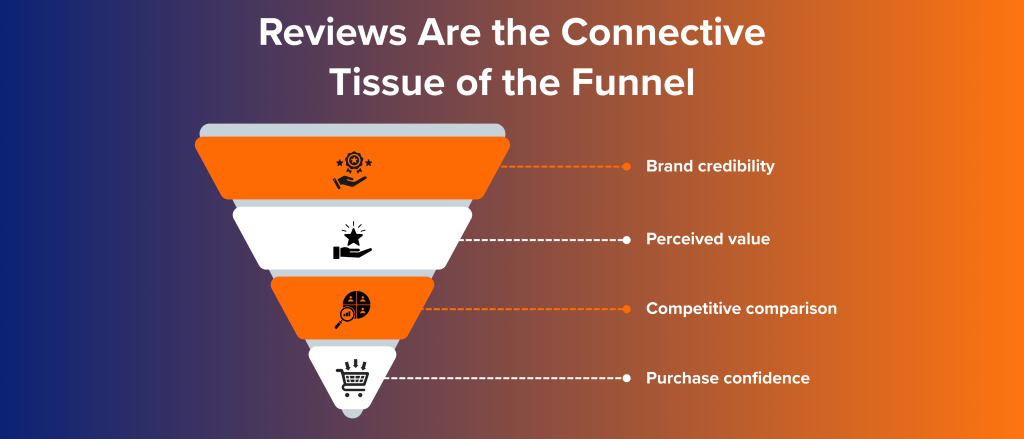
Modern advertising funnels are fragmented across platforms, devices, and moments of discovery. Reviews are the one constant that connects them all.
Whether a customer discovers a brand through search, social, streaming, or referral, reviews often serve as the final checkpoint before conversion. They influence:
- Brand credibility
- Perceived value
- Competitive comparison
- Purchase confidence
If review pages are outdated, unmanaged, or inconsistent, even the most sophisticated advertising strategy will underperform.
Strong online reputation management ensures advertising momentum is not lost at the most critical stage.
Business Travel Raises the Stakes Even Higher
As business travel is projected to grow in 2026, hotels face a unique opportunity — and risk.
Corporate travelers represent one of the most valuable guest segments. They book frequently, spend more, and often influence long-term volume through negotiated agreements.
But before a contract is signed, review pages are scrutinized.
Corporate travel planners reviewing RFP submissions routinely assess online reputation to evaluate service consistency, operational reliability, and guest satisfaction. Reviews act as a real-world performance record that advertising claims alone cannot replace.
Reviews Influence Both Planners and Travelers

The review journey doesn’t stop once a hotel is approved.
Transient business travelers frequently compare reviews among the two or three preferred properties contracted by their employer. In many cases, reviews — not rates or loyalty — determine the final booking decision.
This creates a dual responsibility:
- Appealing to corporate decision-makers
- Reassuring individual travelers
Hotels that actively monitor feedback, respond thoughtfully, and maintain a strong review presence gain a measurable advantage at both levels.
Explore proven review response strategies that reinforce professionalism and trust.
The New Advertising Advantage Is Credibility
As advertising becomes more data-driven and automated, credibility has emerged as the true differentiator.
Consumers are increasingly skeptical of polished messaging. Reviews, by contrast, represent lived experiences — and are perceived as more authentic, human, and trustworthy.
This shift means:
- Advertising attracts attention
- Reviews validate claims
- Responses demonstrate accountability
Brands that align all three win loyalty, repeat business, and long-term reputation strength.
What This Means For Modern Advertising Strategy
The evolving rules of advertising demand a broader view of performance.
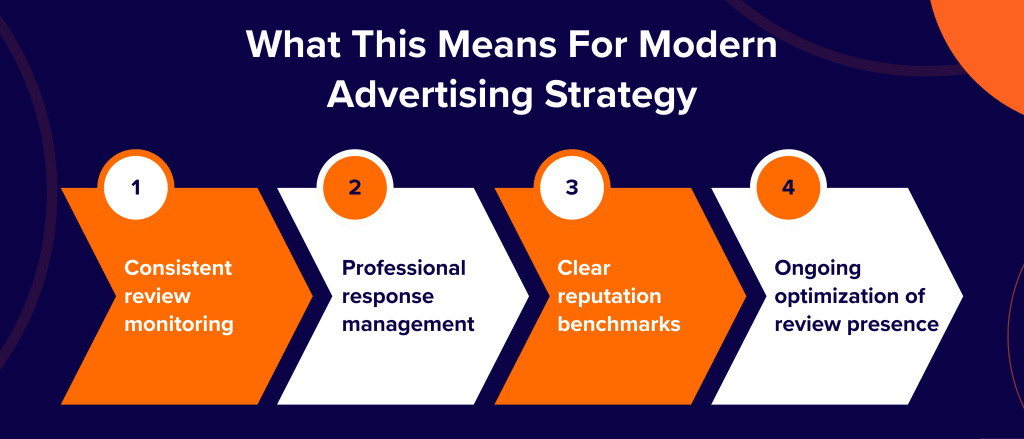
Success is no longer defined by exposure alone, but by what customers find when they seek reassurance. Advertising must be supported by:
- Consistent review monitoring
- Professional response management
- Clear reputation benchmarks
- Ongoing optimization of review presence
Without these elements, even well-funded campaigns risk falling short.
The Reputation Lab Perspective
At The Reputation Lab, we help businesses ensure that reviews support — not undermine — their advertising investments.
Through continuous monitoring, detailed reporting, and best-practice response strategies, we help hotels, restaurants, and service-based businesses strengthen trust at every stage of the customer journey.
Because under the new rules of advertising, the most effective campaigns don’t just get seen — they get believed.