A single review can significantly influence how a business is perceived.
Positive feedback helps attract new customers, while negative reviews can quickly undermine trust, visibility, and conversion rates. This is why removing negative Google reviews is often one of the first concerns businesses raise when managing their online reputation.
The good news is that negative reviews do not always have to remain permanent. With the right understanding of review policies and response strategies, businesses can protect their reputation while maintaining transparency and credibility.
What You Need to Know About Removing Negative Google Reviews
Not every negative review can — or should — be removed.
Online review platforms are designed to reflect genuine customer experiences, including criticism. However, reviews that violate content policies may be eligible for removal. Knowing the difference is essential before taking action.
Understanding how moderation works helps businesses focus their efforts where removal is possible and respond strategically where it is not.
Understanding Review Policy Guidelines
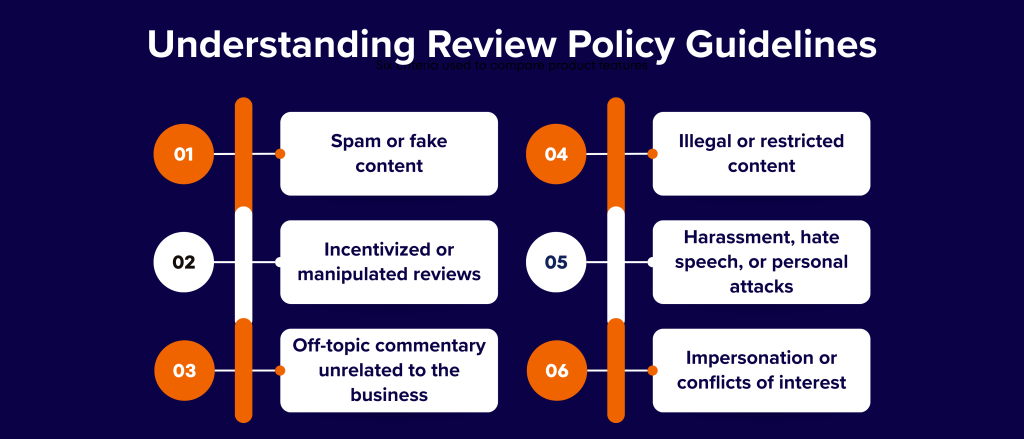
Review platforms allow critical feedback as long as it reflects a genuine experience and is expressed respectfully.
However, reviews may be removed if they include:
- Spam or fake content
- Incentivized or manipulated reviews
- Off-topic commentary unrelated to the business
- Illegal or restricted content
- Harassment, hate speech, or personal attacks
- Impersonation or conflicts of interest
Reviews that simply express dissatisfaction — even harshly — are often permitted if they stay within these boundaries.
How Automated Systems Detect Fake Reviews
Modern moderation relies heavily on machine learning.
Review systems continuously analyze content and behavior patterns to identify suspicious activity. This includes detecting identical reviews across multiple businesses, unusual spikes in ratings, or reviewer behavior that suggests manipulation.
Importantly, moderation does not stop once a review is published. Reviews can be removed days, weeks, or even months later if new signals emerge.
This ongoing enforcement helps maintain trust — but it also means legitimate reviews can sometimes be removed or delayed.
When Negative Review Removal Is Appropriate
Businesses should consider removal when a review:
- Comes from someone who was not a real customer
- Appears to be posted by a competitor
- Contains profanity, threats, or hate speech
- Makes unsubstantiated accusations
- Is clearly generic or copy-pasted
Removal should never be pursued simply because a review is unfavorable. Disagreement alone is not grounds for removal.
How to Report a Negative Review
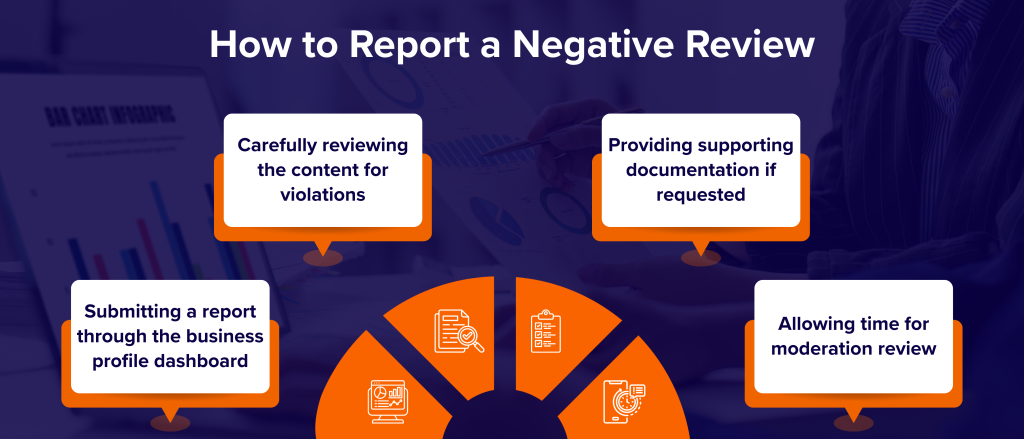
While businesses cannot delete reviews directly, they can request a review check if a policy violation is suspected.
The general process involves:
- Carefully reviewing the content for violations
- Flagging the review through the business profile dashboard
- Selecting the reason for the flagged review
- Allowing time for moderation review
Outcomes are not guaranteed, but reporting problematic reviews is an important step in online reputation management.
What To Do If a Review Is Not Removed
If a reported review is found to comply with policy, it will remain visible.
At this point, businesses can:
- Submit a one-time appeal if eligible
- Monitor the review for future changes
- Focus on response and reputation recovery
In many cases, responding professionally has a greater long-term impact than removal.
How to Respond to Genuine Negative Reviews
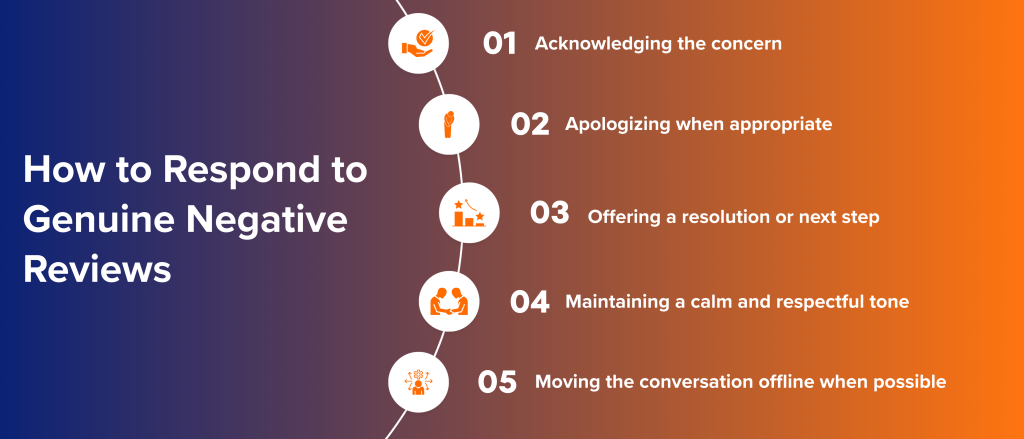
Responding to reviews is one of the most powerful reputation tools available.
A thoughtful response demonstrates accountability, professionalism, and care for the customer experience. Best practices include:
- Acknowledging the concern
- Apologizing when appropriate
- Offering a resolution or next step
- Maintaining a calm and respectful tone
- Moving the conversation offline when possible
Effective review response strategies can turn criticism into an opportunity to build trust — not just with the reviewer, but with future customers reading the exchange.
Why Negative Reviews Still Have Value
Negative reviews are not always harmful.
Many customers actively look for critical feedback to assess authenticity and risk. When handled well, negative reviews can:
- Improve credibility
- Highlight service recovery efforts
- Demonstrate transparency
- Strengthen long-term trust
A balanced review profile often performs better than one that appears overly curated or artificially positive.
The Reputation Lab Perspective
At The Reputation Lab, we help businesses navigate removing negative Google reviews with clarity and confidence.
Our approach combines policy expertise, continuous monitoring, and professional response strategies to ensure reviews support — rather than undermine — long-term reputation goals.
Because in today’s search and trust-driven environment, success isn’t about eliminating all criticism. It’s about managing it correctly.