

Business travel is returning — and evolving.
As corporate travel volumes continue to grow into 2026, hotels are once again competing for one of their most valuable guest segments. But today’s corporate bookings are influenced by far more than negotiated rates or brand familiarity. Increasingly, business travel reviews are shaping which hotels make the shortlist — and which are quietly eliminated.
From formal RFP processes to individual traveler choice, reviews now play a central role in how hotels are evaluated, compared, and selected.
Why Business Travel Reviews Influence Corporate Bookings
Business travel decisions are built on trust, consistency, and risk reduction.
Corporate travel planners and procurement teams rely on reviews to validate claims made in proposals and sales conversations. Reviews provide real-world insight into service reliability, cleanliness, staff responsiveness, and overall guest experience — all critical factors for business travelers.
For hotels, this means review performance is no longer just a marketing metric. It’s a decision-making signal.
Reviews Play a Role Long Before the Booking
Corporate travel decisions begin well before a contract is signed.
During the RFP process, review pages are often reviewed alongside pricing, amenities, and location. Patterns within reviews — not just star ratings — help planners assess whether a property can consistently meet the expectations of frequent business travelers.
Common themes corporate reviewers look for include:
- Reliability and consistency
- Staff professionalism
- Check-in and checkout efficiency
- Quiet rooms and work-friendly environments
Hotels with unmanaged or outdated reviews risk being ruled out early.
Approved Hotels Are Still Compared By Travelers
Even after a hotel is approved as a preferred property, the decision is not final.
Transient business travelers frequently compare reviews among the two or three contracted hotels available to them. In many cases, reviews — not loyalty programs or negotiated rates — determine where the traveler ultimately stays.
This makes ongoing review performance essential, even after corporate agreements are secured.
Business Travelers Value Recent, Detailed Feedback
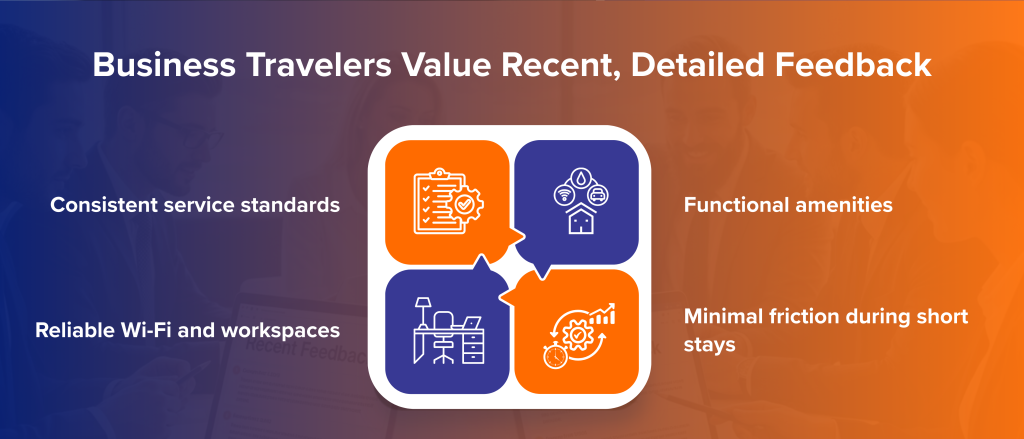
Unlike leisure travelers, business guests tend to prioritize practical details over inspiration.
They look for recent reviews that confirm:
- Consistent service standards
- Functional amenities
- Reliable Wi-Fi and workspaces
- Minimal friction during short stays
Older reviews or vague feedback carry less weight. A steady flow of recent, relevant reviews signals operational stability — a key requirement for corporate travel.
Consistent review monitoring strategies help ensure this feedback remains current and visible.
Responses Matter As Much As Ratings
Business travel reviews are not evaluated in isolation.
How management responds to feedback plays a significant role in perception. Thoughtful, professional responses demonstrate accountability, service culture, and problem resolution — qualities corporate buyers value highly.
A lack of response, or defensive tone, can raise concerns about how issues are handled behind the scenes.
Effective review response strategies reinforce trust at both the organizational and individual traveler level.
Negative Reviews Carry Different Weight in Business Travel
Negative feedback from business travelers is often scrutinized more closely.
Because corporate guests travel frequently, their reviews are perceived as informed and experience-driven. When negative reviews are left unaddressed, they can disproportionately influence decision-makers.
However, when handled correctly, negative reviews can become proof points of service recovery and responsiveness — strengthening credibility rather than weakening it.
Reviews Influence Long-Term Corporate Relationships
Business travel is not a one-time transaction.
Corporate accounts represent repeat stays, predictable volume, and long-term revenue. Reviews act as an ongoing performance record that can influence renewals, expansions, or reductions in contracted volume.
Hotels that actively manage their review presence are better positioned to protect and grow these relationships over time.
What This Means For Hotels in 2026
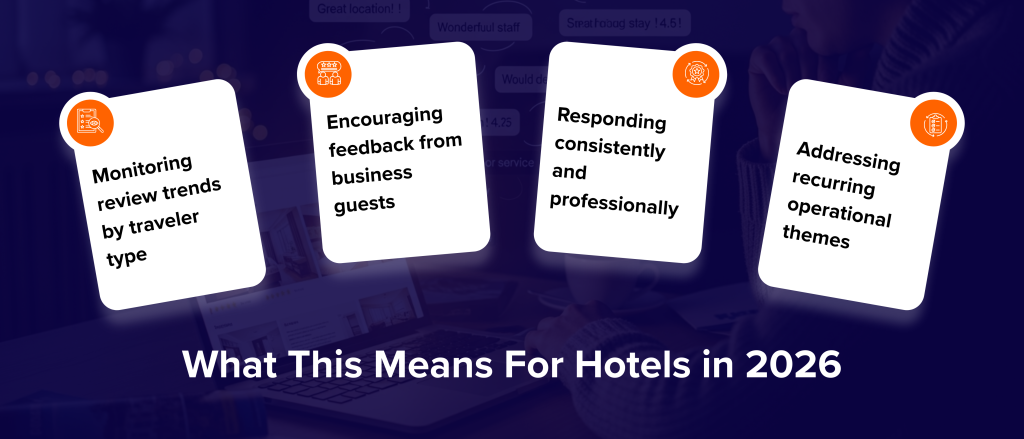
As business travel continues to rebound, hotels must treat reviews as a core component of their corporate strategy.
This includes:
- Monitoring review trends by traveler type
- Encouraging feedback from business guests
- Responding consistently and professionally
- Addressing recurring operational themes
Without this foundation, even strong sales efforts may fall short.
The Reputation Lab Perspective
At The Reputation Lab, we help hotels maximize the impact of business travel reviews through structured monitoring, insightful reporting, and best-practice response strategies.
We focus on ensuring reviews accurately reflect the experience corporate travelers can expect — and that decision-makers see a clear pattern of reliability, responsiveness, and trust.
Because in today’s business travel landscape, reviews don’t just influence bookings. They influence relationships.