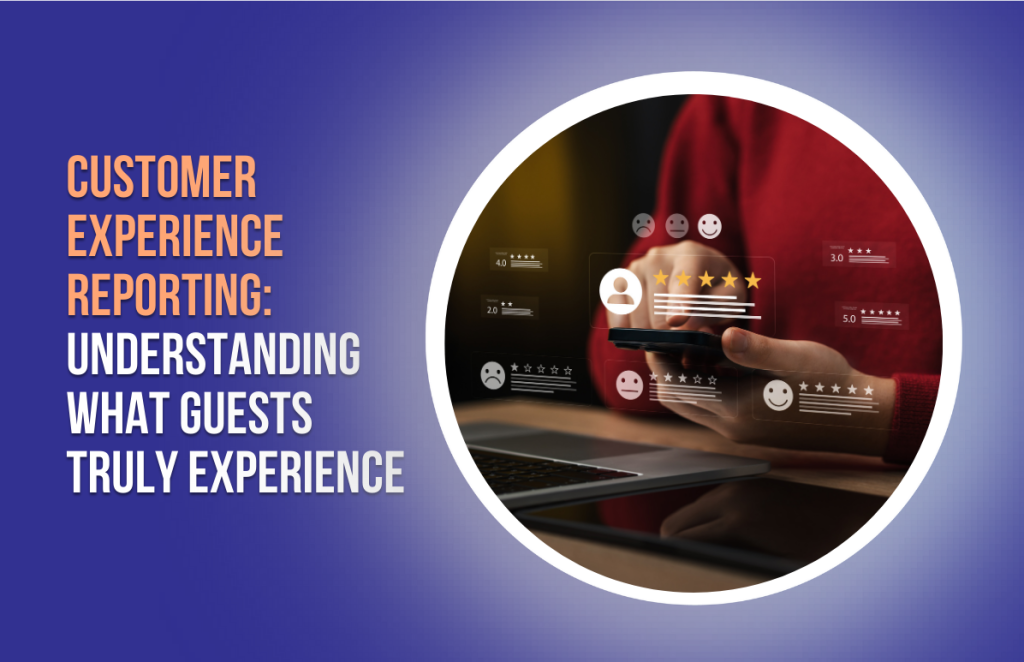
Guest experiences increasingly shape travel decisions and brand trust. Behind every review, comment, or piece of feedback is a series of moments that influenced how a guest felt during their stay. Customer experience reflection plays a critical role in understanding those moments and translating them into clearer service direction.
When experience insights are reviewed with care and context, hotels gain a deeper understanding of how interactions unfold from the guest’s perspective. This understanding supports consistency, reduces friction, and helps teams align daily service behaviors with guest expectations.
Reporting Customer Experience that Reflects True Guest Perception
Customer experience reporting is most effective when it focuses on perception rather than surface-level commentary. Guests often communicate their experiences indirectly, through tone, emotion, and the way situations are described.
- Capturing Moments That Influence Guest Emotion
Small interactions often leave lasting impressions. A delayed response, unclear explanation, or thoughtful gesture can shape how a guest remembers their stay. Capturing these moments helps hotels understand which interactions contribute positively and which create uncertainty or frustration.
- Reading Between the Lines of Guest Interactions
Guests do not always describe issues directly. Phrases that express confusion, disappointment, or hesitation often signal deeper concerns. Reading between the lines allows teams to interpret what guests are truly experiencing rather than reacting only to explicit complaints.
- Spotting Hidden Guest Friction Points
Not all friction leads to immediate complaints. Repeated mentions of minor inconveniences or unclear processes may point to underlying service gaps. Identifying these subtle signals early helps prevent larger reputation issues over time.
Experience Signals Hotels Should Pay Attention To

Certain experience signals appear consistently across guest feedback and deserve closer attention.
- Service Behaviors That Shape Guest Memory
Guests remember how situations were handled more than the situation itself. Calm communication, clear explanations, and respectful engagement strongly influence whether a stay is remembered positively.
- Consistency Markers Guests Instantly Notice
Consistency across check-in, service requests, and follow-up interactions builds confidence. When experiences feel aligned across touchpoints, guests are more likely to describe the stay as dependable and well-managed.
- Early Warning Signs That Often Lead to Negative Reviews
Language that reflects confusion, unmet expectations, or repeated inconvenience often appears before negative reviews are posted publicly. Recognizing these signs early allows hotels to address concerns proactively.
Gathering Guest Insights With Intention

Customer satisfaction is not about collecting more feedback—it is about listening more intentionally.
- Listening Across All Guest Touchpoints
Guest experiences unfold across multiple moments, from arrival to departure and beyond. Reviews, direct comments, and follow-up feedback all contribute to a fuller picture of how a stay is perceived.
- Converting Feedback Into Clear Action Direction
Feedback becomes valuable when it leads to clarity. Organizing insights around recurring themes helps teams focus on meaningful improvements rather than reacting to isolated comments.
- Understanding the Difference Between Emotional and Operational Feedback
Operational feedback often relates to processes, timing, or clarity. Emotional feedback reflects how guests felt during interactions. Both are essential, but emotional feedback often reveals why operational issues matter to guests.
Reducing Complaints Through Better Experience Awareness
Awareness is one of the strongest tools for reducing future complaints.
- Recognizing Service Decline Before It Escalates
Shifts in guest tone or recurring concerns can indicate early service decline. Addressing these signals promptly helps prevent dissatisfaction from spreading across future stays.
- Identifying Patterns That Call for Team Coaching
When similar issues appear repeatedly, they often point to areas where teams may benefit from additional guidance or alignment. Addressing these patterns supports consistency without placing blame.
- Using Insight to Support Timely Guest Recovery
Timely recovery depends on understanding what matters most to the guest in the moment. Clear insight helps teams respond with empathy and relevance rather than generic solutions.
Turning Experience Reporting Into Reputation-Building Action

This becomes most powerful when insights are applied consistently.
- Strengthening Moments That Earn Positive Reviews
Positive guest experiences often share common traits, such as clarity, attentiveness, and thoughtful communication. Reinforcing these moments helps maintain service standards that guests value.
- Removing Breakpoints That Undermine Guest Trust
Breakpoints—moments where expectations are not met—can quietly erode trust. Identifying and addressing these areas supports smoother guest journeys and stronger confidence.
-
Reinforcing Brand Promises Through Consistent Behavior
Brand promises are upheld through everyday actions. Consistent behavior across teams ensures that what guests expect aligns with what they experience.
The Reputation Lab’s Observe–Interpret–Elevate Approach
Once hotels understand the value of customer experience measurement, applying insights consistently becomes the next step.
-
Observing Guest Emotion During Real Guest Interactions
Observation focuses on how guests express satisfaction, hesitation, or concern across feedback channels. This perspective emphasizes real guest emotion rather than abstract evaluation.
-
Interpreting Meaning Behind Repeated Experience Issues
Repeated customer issues often point to shared challenges rather than individual situations. Interpreting these patterns helps teams focus on improvement areas that matter most to guests.
-
Elevating Service Through Focused, Practical Improvements
Service elevation does not require complex systems. Practical improvements grounded in Foundations of Hospitality, Guest Resolution, and Guest Engagement help teams translate insight into daily action. This includes thoughtful approaches to upselling and cross-selling when they align naturally with guest needs.
Final Thoughts
This offers hotels a clearer understanding of what guests truly experience, not just what is said on the surface. When insights are gathered with intention and applied thoughtfully, service becomes more consistent, communication improves, and trust strengthens over time.
The Reputation Lab supports teams in observing guest experiences, interpreting meaningful patterns, and elevating service through practical, human-centered improvements that protect and strengthen long-term reputation.