
The hospitality and service industries are evolving rapidly, with rising customer expectations and increasing competition shaping how businesses operate. Today’s guests expect more than just a product or service—they expect seamless, personalized, and responsive experiences.
With this shift, effective guest handling has become a critical priority. Whether it’s addressing concerns, responding to feedback, or creating memorable interactions, how businesses handle their guests directly impacts satisfaction, loyalty, and long-term success.
This guide explores practical tips, proven strategies, and actionable steps to help businesses master guest handling and consistently deliver exceptional service.
Guest Handling Best Practices for Modern Businesses

Guest interactions happen across multiple channels—front desks, emails, review platforms, and social media. Regardless of where the interaction occurs, the approach should always be professional, timely, and thoughtful.
But what does effective guest handling actually look like?
1. Be Prompt and Responsive
Speed matters. Guests expect quick responses, especially when raising concerns. Delayed replies can escalate frustration, while timely communication shows attentiveness and care.
Set clear response time goals across all platforms to ensure consistency and reliability.
2. Show Empathy and Appreciation
Guest concerns should never be dismissed. Acknowledge their experience, thank them for their feedback, and show genuine understanding.
Empathy builds trust and helps de-escalate even the most challenging situations.
3. Turn Apologies into Action
Saying “sorry” is just the beginning. Effective guest handling involves taking responsibility and offering meaningful solutions.
Whether it’s fixing an issue, offering compensation, or ensuring it doesn’t happen again—actions speak louder than words.
4. Create Clear Team Guidelines
Not all guest interactions are easy. Some situations can be complex or emotionally charged.
Providing your team with structured guidelines helps them handle different scenarios confidently. Define processes for common issues and outline acceptable solutions, including when to escalate matters.
5. Keep Everyone Informed
Guest issues often involve multiple departments. Whether it’s housekeeping, maintenance, or customer support, internal communication is key.
Sharing feedback across teams helps prevent recurring problems and improves overall service quality.
6. Assign Responsibility for Guest Communication
Who responds to emails? Who monitors reviews? Who handles social media messages?
Clearly defining roles ensures no guest concern is overlooked and helps maintain accountability within your team.
7. Train Teams Through Real Scenarios
Practice makes perfect. Conduct training sessions where employees role-play different guest situations—from common complaints to unusual challenges.
Encourage collaboration and discussion to identify what works and what can be improved.
8. Monitor Social Media and Online Platforms
Guests frequently share feedback online. Ignoring these platforms means missing valuable insights and opportunities to engage.
Actively monitor and respond to comments, reviews, and messages to stay connected with your audience.
9. Track and Analyze Guest Feedback
Logging guest concerns allows you to identify trends and recurring issues.
Use this data to improve processes, refine training, and enhance the overall guest experience.
10. Follow Up with Guests
Guest handling doesn’t end with resolving an issue. Following up shows commitment and care.
A simple check-in can turn a negative experience into a positive one and strengthen customer relationships.
Common Guest Handling Challenges Businesses Face
Understanding frequent guest concerns can help you prepare and respond effectively.
Booking and Reservation Issues
Errors in bookings, incorrect details, or miscommunication can quickly frustrate guests. Clear confirmations and regular communication help reduce these problems.
Cleanliness and Environmental Concerns
Cleanliness plays a major role in customer satisfaction. Even minor lapses can impact the overall experience.
Maintaining high standards across all areas is essential.
Missing Amenities or Services
Guests expect transparency. If certain services or amenities are unavailable, it should be clearly communicated in advance.
Service Quality Complaints
Negative interactions with staff can overshadow an otherwise good experience. Consistent training ensures service quality remains high.
Technical and Maintenance Issues
From connectivity problems to equipment failures, technical issues can disrupt the guest journey.
Quick resolution and proactive communication are key to minimizing impact.
Issues Caused by Other Guests
Noise, behavior, or crowding can affect guest comfort. Proper planning and management help reduce such conflicts.
The Impact of Poor Guest Handling
Failing to manage guest interactions effectively can have serious consequences:
- Damage to brand reputation
- Negative online reviews
- Loss of repeat business
- Reduced revenue opportunities
- Increased operational challenges
Guests who feel ignored or undervalued are unlikely to return—and may discourage others from choosing your business.
Why Effective Guest Handling Drives Success
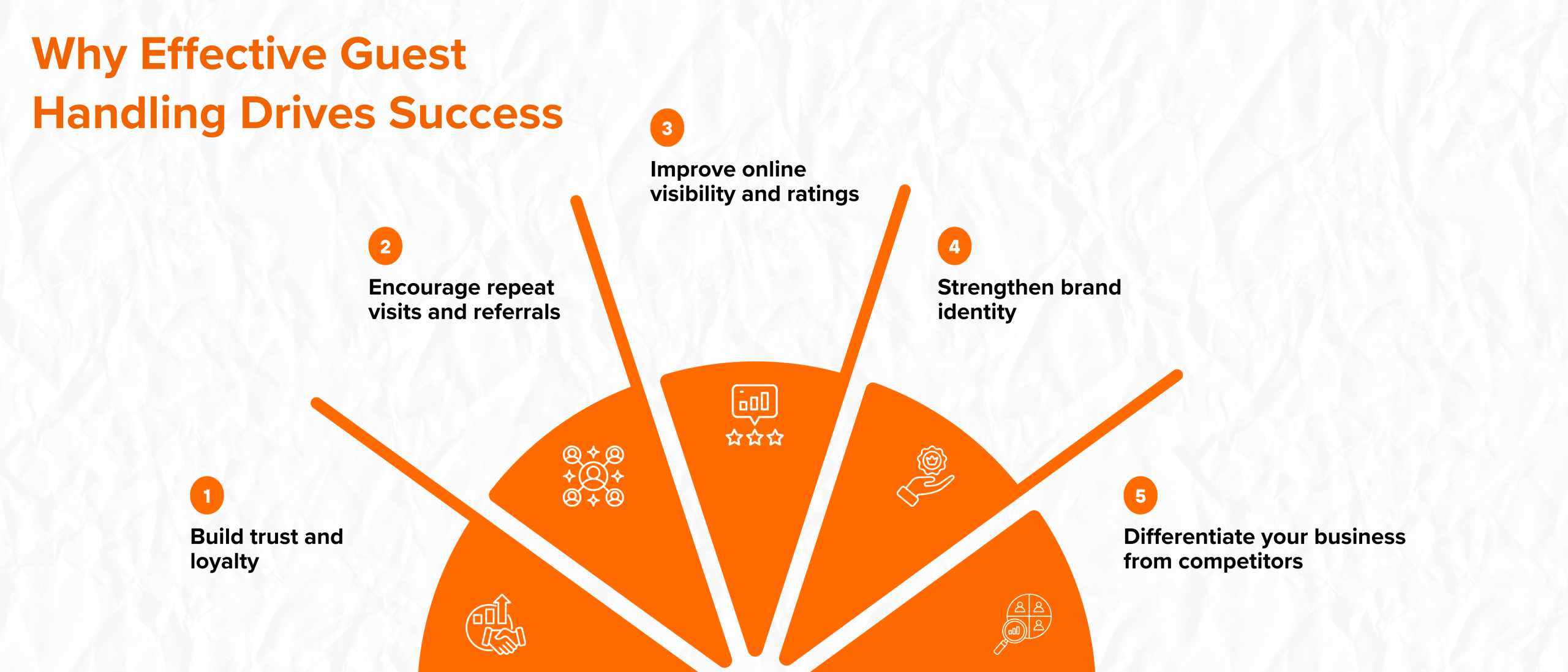
On the other hand, strong guest handling strategies can:
- Build trust and loyalty
- Encourage repeat visits and referrals
- Improve online visibility and ratings
- Strengthen brand identity
- Differentiate your business from competitors
Even when things go wrong, handling situations well can leave a lasting positive impression.
Elevate Your Guest Handling with The Reputation Lab

Effective guest handling extends beyond direct interactions—it includes how businesses respond to online feedback.
The Reputation Lab is a consulting agency specializing in review response services. In addition to replying to reviews, they monitor and report data, and for those in upgraded programs, focus on best practices aimed at elevating the online reputation of hotels, restaurants, and service-based businesses across platforms like TripAdvisor, Google, OTAs, Yelp, and other industry-specific sites.
Responding to reviews allows your business to showcase the hospitality or customer service guests can expect. A thoughtful management response builds loyalty, encourages repeat visits, and offers resolution when needed.
Having processed over one million reviews, The Reputation Lab has worked with both branded and independent hotels across luxury, lifestyle, boutique, and limited-service segments.
Frequently Asked Questions
What is guest handling in hospitality?
Guest handling involves managing all guest interactions, including inquiries, feedback, and complaints, to ensure satisfaction.
How can guest handling improve customer experience?
By addressing concerns promptly and professionally, businesses can enhance trust and create positive experiences.
What are the most important guest handling skills?
Communication, empathy, problem-solving, and responsiveness are key skills.
Why should businesses respond to guest complaints?
Responding shows accountability, builds trust, and helps improve services.
How does guest handling impact business growth?
Effective handling increases customer loyalty, improves reputation, and drives repeat business.