In hospitality, perfection is rare—but memory is permanent. Handling guest complaints is not about avoiding mistakes; it is about managing moments that shape how guests remember their stay. Guests may forget the room number or breakfast menu, but they will always remember how they felt when something went wrong. A delayed check-in, a missed request, or a moment of miscommunication can instantly shift perception.
What separates average hotels from exceptional ones is not the absence of problems, but the way those moments are handled. Thoughtful complaint management taps directly into how the human brain processes trust, fairness, and emotional recovery—turning friction into connection rather than conflict.
Why Handling Guest Complaints Matters
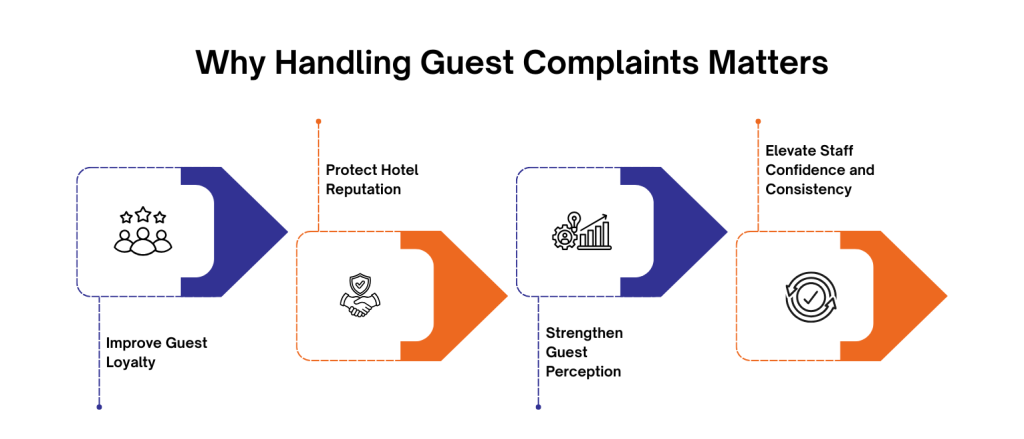
- Improve Guest Loyalty
When a concern is resolved with empathy and clarity, the brain experiences relief. This emotional release strengthens attachment, often creating stronger loyalty than a flawless stay ever could.
- Protect Hotel Reputation
Reviews are emotional narratives, not technical audits. Guests write about how situations made them feel. A calm, respectful response can prevent a single issue from defining public perception.
- Strengthen Guest Perception
Perception forms in moments of stress. Hotels that respond thoughtfully during friction appear more professional, trustworthy, and genuinely guest-centric.
- Elevate Staff Confidence and Consistency
Clear complaint practices reduce hesitation and emotional fatigue among staff. Confidence leads to consistency, and consistency builds guest trust.
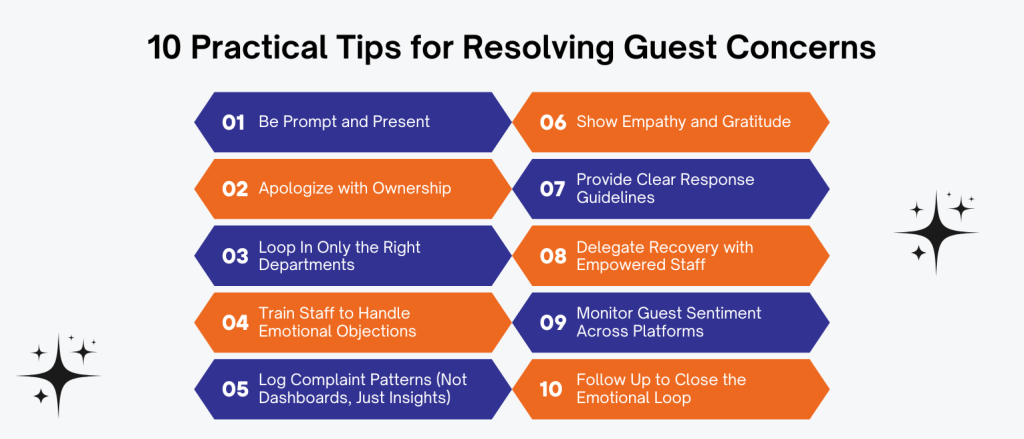
10 Practical Tips for Resolving Guest Concerns
Effective responses don’t come from rigid scripts—they come from understanding human behavior. When teams focus on handling guest complaints with emotional awareness, resolution becomes faster, calmer, and more meaningful.
- Be Prompt and Present
Immediate acknowledgment lowers emotional intensity. Guests seek presence before solutions.
- Show Empathy and Gratitude
Recognition activates validation. Expressing understanding helps guests feel respected rather than dismissed.
- Apologize with Ownership
Sincere apologies reduce defensiveness. Ownership restores emotional balance and credibility.
- Provide Clear Response Guidelines
Clarity prevents confusion. When staff know the next step, guests feel guided instead of stalled.
- Loop In Only the Right Departments
Over-escalation delays resolution. Precision improves speed and confidence.
- Delegate Recovery with Empowered Staff
Empowered employees resolve issues faster, preventing emotional buildup.
- Train Staff to Handle Emotional Objections
Guests speak emotionally, not logically. Training helps staff respond calmly without defensiveness.
- Monitor Guest Sentiment Across Platforms
Complaints surface everywhere—from front desks to inboxes to online conversations.
- Log Complaint Patterns (Not Dashboards, Just Insights)
Trends reveal root causes. Insight beats complexity every time.
- Follow Up to Close the Emotional Loop
Closure matters. Follow-ups reassure guests that their experience truly mattered.
Common Guest Complaints Hotels Encounter
Most dissatisfaction follows predictable patterns. Understanding these reduces surprise and improves preparedness.
- Reservation Miscommunication
Confusion or errors during booking that disrupt guest expectations.
- Cleanliness Gaps
Rooms or facilities not meeting hygiene and cleanliness standards.
- Missing Amenities
Absence of promised items like towels, toiletries, or minibar supplies.
- Guest Comfort Issues
Problems affecting sleep, temperature, or overall room comfort.
- Wi-Fi and Technology Friction
Connectivity issues or malfunctioning in-room technology.
- Poor Customer Service Moments
Unfriendly, unhelpful, or slow responses from staff.
- Maintenance Interruptions
Broken or malfunctioning facilities affecting the guest experience.
- Noise or Disruption from Other Guests
Disturbances that impact rest and overall satisfaction.
Each category carries a distinct emotional trigger—frustration, disappointment, or a sense of loss of control.
Consequences of Ignoring Complaints
Ignoring dissatisfaction doesn’t make it disappear—it redirects it. Poorly handling the guest complaints often leads to long-term damage that is harder to repair.
- Erodes Guest Trust
Silence signals indifference. Once trust breaks, recovery becomes difficult.
- Damages Review Reputation
Unresolved emotions often surface publicly, shaping future booking decisions.
- Creates Negative Emotion Chains
One ignored issue amplifies others, escalating dissatisfaction.
- Lowers Staff Morale
Unresolved problems frustrate employees, increasing burnout.
- Increases Complaint Volume Over Time
When causes aren’t addressed, the same issues repeat.
Discovering Unspoken Complaints
Not all dissatisfaction is voiced directly. Improving the handling of guest complaints also means identifying what guests choose not to say.
- Post-Checkout Sentiment Checks
Simple follow-ups uncover concerns guests hesitated to express in person.
- Monitoring Social Media & Forums
Guests speak freely where they feel unseen. These spaces reveal honest emotion.
- Identifying Emotion Trends from Feedback
Repeated emotional language highlights deeper experience gaps.
Transforming Complaints Into Opportunities
When approached with intention, handling guest complaints becomes a source of insight rather than stress.
- Personalized Recovery Moments
Tailored responses feel authentic and memorable.
- Staff Training & Scenario Role-Playing
Practice builds emotional intelligence and response confidence.
- Insight-Driven Adjustments
Patterns guide smarter operational improvements.
- Transparent Communication with Guests
Honesty builds credibility—even when solutions take time.
How The Reputation Lab Supports Hotels
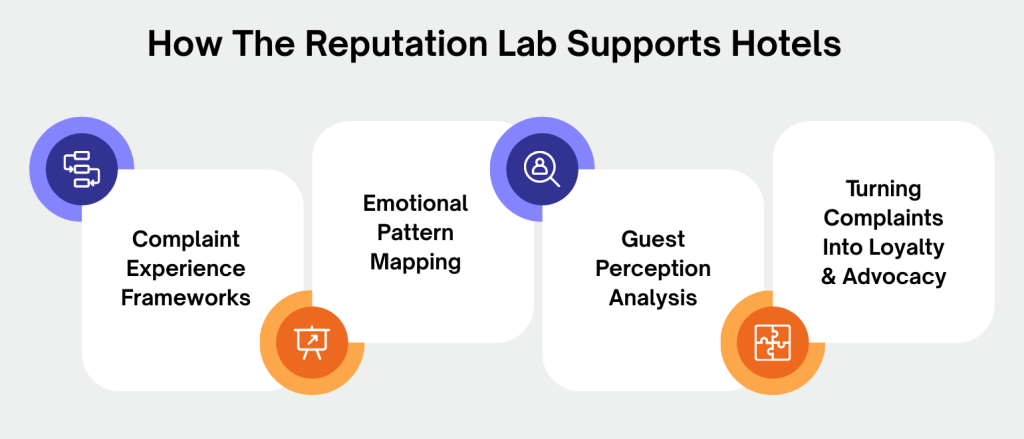
At The Reputation Lab, we help hotels address guest feedback thoughtfully, focusing on both immediate concerns and the overall guest experience.
Complaint Experience Frameworks
Structured approaches that guide teams in resolving issues while maintaining a positive guest experience.
Feedback Highlights
Identifying common themes in guest feedback to help teams prioritize improvements.
Guest Perception Insights
Examining key moments in the guest experience that influence overall reputation.
Turning Feedback Into Loyalty
Using reviews as an opportunity to strengthen relationships, encourage repeat visits, and foster positive word-of-mouth.
Final Thought
Every complaint is a moment of truth. Hotels that approach handling guest complaints with emotional intelligence don’t just resolve issues—they strengthen relationships and shape lasting impressions. When recovery is handled with intention and consistency, even difficult experiences can become defining positives in a guest’s story. This belief sits at the core of how The Reputation Lab helps hospitality teams understand perception, respond with clarity, and protect what matters most—the guest’s trust.