

Creating meaningful guest experiences requires more than good intentions. Every interaction, conversation, and response contributes to how guests perceive a hotel. Service quality management focuses on understanding those interactions, aligning teams around shared service principles, and ensuring guests experience aligned service, care, and clarity throughout their stay at every stage of the guest journey.
In hospitality, guests rarely judge service by a single moment. Their perception is shaped by how well experiences connect from arrival to departure. Thoughtful service quality management helps hotels recognize where expectations are met, where they fall short, and where small improvements can create lasting impressions.
Why Service Quality Management Matters In Hotels
Hotels operate in a space where experiences are personal and emotionally driven. Guests arrive with expectations influenced by previous stays, brand promises, and individual needs. Managing service quality helps hotels align those expectations with everyday interactions, reducing service gaps and strengthening guest trust over time.
When applied thoughtfully, service quality management allows teams to understand how their actions influence guest perception across the entire guest journey.
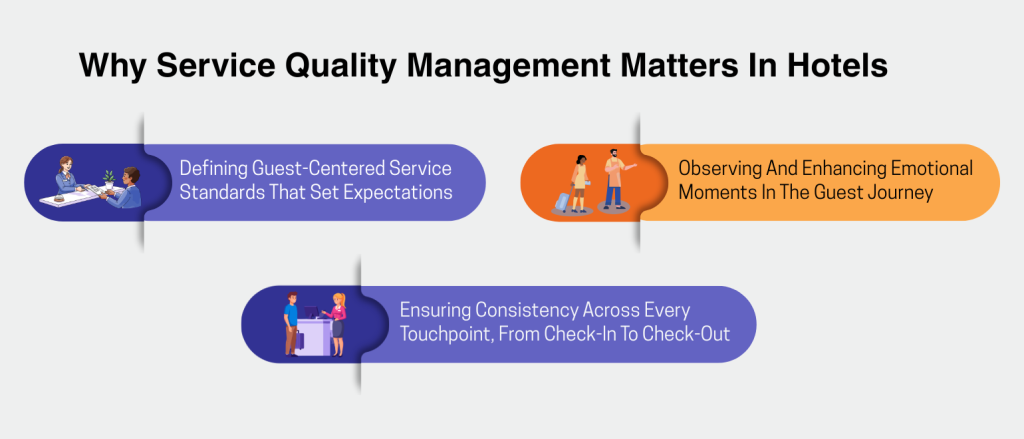
- Defining Guest-Centered Service Standards That Set Expectations
Guest-centered service standards provide clarity without limiting authenticity. These standards are not scripts. They guide how teams communicate, respond, and prioritize guest needs while allowing flexibility for genuine human connection.
When colleagues share a common understanding of service expectations, decision-making becomes more consistent. Guests benefit from clear communication and interactions that feel intentional rather than improvised.
- Observing And Enhancing Emotional Moments In The Guest Journey
Certain moments carry more emotional weight for guests. Arrival experiences, issue resolution, special requests, and departure interactions often define how a stay is remembered.
By observing these moments closely, hotels can identify where service creates comfort and where friction appears. Enhancing emotional moments often comes down to tone, attentiveness, and timing rather than grand gestures.
- Ensuring Consistency Across Every Touchpoint, From Check-In To Check-Out
Consistency builds trust. Guests feel confident when interactions feel aligned, regardless of which colleague they speak with or when the interaction occurs.
Service quality management emphasizes alignment across departments, ensuring service feels connected rather than fragmented across the entire hotel experience. When touchpoints feel cohesive, guests are more likely to view the experience as reliable and professional.
Identifying Experience Signals And Gaps
Understanding service quality requires looking beyond individual comments. Meaningful observations emerge when guest interactions are reviewed across multiple experiences, revealing patterns that may otherwise go unnoticed.
- Guest Feedback Highlights Service Opportunities
Guest feedback, whether shared through reviews, surveys, or direct conversations, often reveals recurring themes. These patterns highlight opportunities for improvement that may not be visible during daily operations.
Rather than reacting to isolated feedback, identifying trends helps hotels focus on changes that meaningfully improve guest experiences.
- Emotional Cues Reveal Areas Of Satisfaction And Friction
Guests often communicate emotion through their word choice. Expressions of appreciation, confusion, disappointment, or frustration signal how service interactions are perceived.
Recognizing these emotional cues helps teams understand not only what happened but also how the experience felt from the guest’s perspective.
- Observing Timing, Tone, And Consistency Enhances Insights
Service challenges are not always about outcomes. Delayed responses, rushed conversations, or inconsistent messaging can shape guest impressions even when solutions are provided. When feedback is reviewed thoughtfully and with care, it helps teams better understand guest expectations.
Supporting Teams To Deliver Consistent Guest Experiences

Consistency depends on confident, supported teams. Clear guidance helps colleagues navigate guest interactions with assurance and empathy.
The Reputation Lab supports hotels by applying practical service quality management principles, reinforcing hospitality fundamentals, and guiding teams toward consistent, guest-centered service behaviors.
- Foundations Of Hospitality: Creating Memorable Guest Interactions
The foundations of hospitality focus on respect, attentiveness, and genuine care. These principles guide how colleagues engage with guests, listen actively, and respond thoughtfully.
Strong foundations empower teams to create interactions that feel personal without being inconsistent or informal.
- Guest Resolution: Addressing Concerns With Empathy And Ownership
Guest concerns are an inevitable part of hospitality. Effective guest resolution emphasizes listening carefully, acknowledging emotions, and taking ownership of the situation.
When concerns are handled with empathy and clarity, guests often feel heard—even when outcomes are not immediate.
- Guest Engagement: The Art of Conversation and Comfort Checks
Guest engagement training focuses on the Art of Conversation, encouraging natural dialogue and timely comfort checks throughout the guest’s stay.
These interactions help ensure guests feel at home while allowing teams to identify and resolve concerns early, thereby supporting a balanced, positive guest experience.
Collecting And Using Guest Feedback Effectively
Feedback plays an important role in shaping service improvements, especially when a clear service framework guides teams’ actions.
Many hotels work with The Reputation Lab to gain a clearer perspective on guest feedback, helping teams recognize recurring themes without adding complexity.
- Gathering Insights Through Surveys, Reviews, And Direct Conversations
Guests share feedback through multiple channels, each offering a different perspective. Surveys provide structured insight, reviews reflect public perception, and direct conversations offer immediate context.
Together, these inputs create a more complete understanding of guest experiences.
- Recognizing Recurring Themes To Guide Improvement
Not every comment requires immediate action. Recognizing recurring themes helps prioritize changes that consistently affect guest experiences.
These themes often highlight communication gaps, unclear expectations, or service moments that need refinement.
- Translating Feedback Into Practical, Guest-Centric Actions
Feedback becomes meaningful when it leads to practical action. Small adjustments in communication, response timing, or service approach can significantly influence how guests perceive quality.
At its core, service quality management provides structure while still allowing flexibility for genuine, human interactions.
How The Reputation Lab Helps Hotels Deliver Consistent Service
Through hands-on guidance and practical training rooted in hospitality principles, The Reputation Lab helps hotels operationalize service quality management within everyday guest interactions.
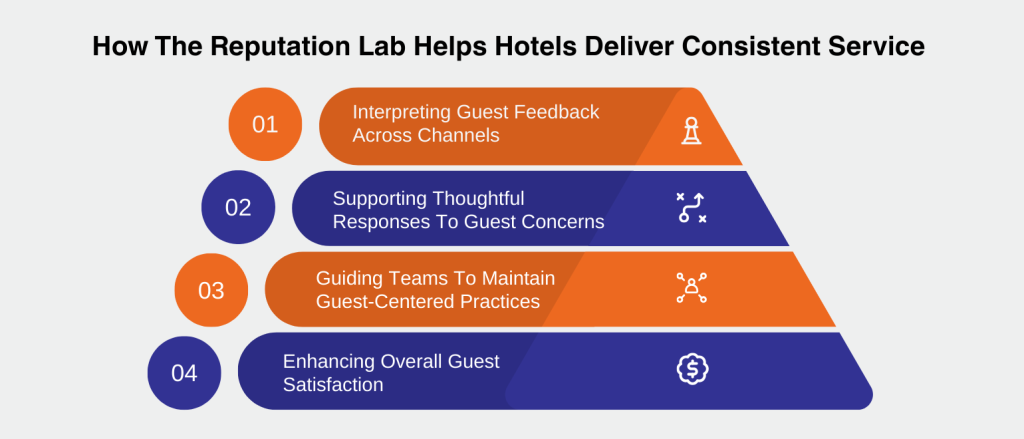
- Interpreting Guest Feedback Across Channels
The Reputation Lab supports teams in interpreting guest feedback across reviews, surveys, and direct comments, identifying experience signals that guide thoughtful action.
- Supporting Thoughtful Responses To Guest Concerns
Responding to guest feedback requires balance, empathy, and professionalism. Guidance focuses on acknowledging experiences clearly while maintaining a consistent brand voice.
- Guiding Teams To Maintain Guest-Centered Practices
Through structured support rooted in Foundations of Hospitality, Guest Resolution, and Guest Engagement, teams are guided toward service behaviors that prioritize comfort, clarity, and meaningful guest interactions.
- Enhancing Overall Guest Satisfaction
By focusing on clarity, consistency, and emotional understanding, hotels can strengthen service delivery without relying on complex systems or enterprise tools. When applied effectively, service quality management helps create experiences guests remember for the right reasons.
Final Thoughts
Exceptional guest experiences are built through consistency, empathy, and attention to meaningful moments. Service quality management provides the structure needed to deliver those experiences consistently, without losing the human touch.
Consistency in service is rarely accidental—it is built through awareness, guidance, and intentional daily practices.